

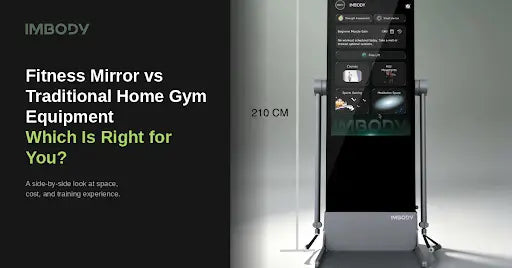
Space, training control, resistance range, and access to guided workouts can shape how well a home setup fits your routine. A well-planned home fitness gym should make regular training easier while supporting strength, mobility, cardio, and recovery. The choice between a fitness mirror and traditional equipment depends on how you train, how much space you have, and how much guidance you need.
How Traditional Home Gym Equipment Fits Different Training Styles
Traditional equipment gives users a familiar way to build a workout around selected exercises. Dumbbells, benches, resistance bands, racks, and cable systems can each serve a clear purpose. This approach works well for people who already understand their training plan and prefer to control every part of a session.
A traditional home gym can also grow over time. Users may start with basic equipment and add pieces as their goals change. However, more equipment can require more floor space, storage, cleaning, and setup time. The workout area may also need to stay ready for each session.
This setup suits people who enjoy creating their own routines. It can also work well for focused strength training where users want direct control over load, exercise selection, and training volume.
Where a Fitness Mirror Changes the Home Workout Experience
A fitness mirror combines a display, training system, resistance control, and guided content in one compact setup. Instead of moving between several pieces of equipment, users can access different training styles from a single station.
The main difference is not only size. It is how the equipment guides the session. A smart system can display exercises, track performance, adjust resistance, and provide feedback while you train.
This makes a smart mirror workout useful for people who want structure without following a fixed gym schedule. A session can shift from strength work to mobility or recovery without requiring several separate machines.
Comparing Space, Variety, and Training Control
Space is one of the clearest differences between both options. Traditional equipment can spread across a room as more pieces are added. A mirror-based system keeps most functions within one compact footprint.
Training variety also works differently. Traditional equipment offers physical flexibility because users can combine different tools. A smart system offers programmed variety through its software and guided training library.
A home workout equipment setup can therefore suit independent users who prefer choosing their exercises. A connected mirror can suit people who want the equipment to help shape each session.
The better choice depends on whether physical equipment variety or guided digital variety matters more to you.
Which Setup Works Better for Different Users?
A traditional setup may be better if you enjoy designing your own workouts and want simple, familiar equipment. It can also make sense when your main focus is a narrow set of exercises.
A mirror-based setup may be more useful when you want several training modes without filling a room with equipment. It can also support households where different people have different fitness goals.
For example, one person could use the system for strength work while another follows mobility or recovery sessions. This makes a equipment home workout setup more adaptable for shared spaces.
The choice should also consider consistency. Equipment that stays accessible and easy to use can remove some of the friction between deciding to exercise and starting the session.
What to Look for Before Choosing a Smart Fitness System
Look beyond the screen when comparing a smart training system. Resistance range, motor performance, display quality, connectivity, footprint, training content, and safety features all affect daily use.
A resistance training mirror can be especially useful for users who want strength training without storing a large collection of weights. Digital resistance can also allow smaller load changes than some basic home setups.
For buyers, useful questions include:
-
Does the system support your preferred training styles?
-
Can resistance be adjusted during a workout?
-
Does it provide guided programs?
-
Can more than one person use it?
-
How much floor and wall space does installation require?
-
What warranty and support are included?
These points help shift the decision from appearance to actual use.
IMBODY Power S: A Compact Smart Training System
At IMBODY, we designed our Power S around the idea of bringing a private training setup into a smaller home footprint. The system combines a 43-inch HD touchscreen anti-shatter mirror with digital resistance and guided training. It supports up to 260 lbs of resistance with 0.5 kg precision.
The Power S uses dual 750W servo motors and has a 126 × 60 cm footprint. IMBODY recommends 210H × 180W × 200D cm of space, with arms extending up to 150 cm. Wi-Fi, Bluetooth, and screen mirroring are also built in.
Our system is built around several practical features:
-
Smart Body Assessment: We assess posture, strength, and mobility to help create a personal training plan.
-
AI Training Support: The system can detect a failing rep and reduce resistance during the movement.
-
Training Library: Our system includes 150+ programs and 300+ movements covering strength, mobility, cardio, and recovery.
-
Partner Mode: Two profiles can maintain separate training histories on the same system.
-
Wireless Control: Bluetooth handles and a controller allow resistance changes without reaching for the screen.
-
Compact Design: The system uses under 0.6 m² of floor space, helping keep the room open.
-
No Recurring Cost: Lifetime access to included programs comes without an app subscription or monthly membership.
-
Support: We provide private demonstrations, professional installation, concierge support, and customer assistance.
The Power S also has a stated motor lifespan of 10,000 hours, along with a two-year unit warranty and one-year accessory warranty.
Get a Quote
Ready to rethink your home training setup? Visit the official IMBODY India website to explore our Power S. We bring guided training, digital resistance, and smart features into one compact system. Choose a setup designed for your space, routine, and long-term fitness goals.
Frequently Asked Questions
1. Is a fitness mirror better than traditional home gym equipment?
A fitness mirror can be better for users who value guided workouts, compact design, digital resistance, and varied training. Traditional equipment suits independent training preferences.
2. Can a fitness mirror replace traditional gym equipment?
A fitness mirror can replace several common training tools for many users. However, the right choice depends on exercise preferences, strength goals, available space, and training habits.
3. What makes a resistance training mirror useful?
A resistance training mirror combines guided workouts with adjustable digital resistance. This can reduce equipment clutter while supporting strength sessions with controlled load changes and training feedback.
4. Is a smart mirror workout suitable for beginners?
Yes, a smart mirror workout can suit beginners because guided programs provide structure. Assessment tools and coaching features can also help users understand exercises and build consistent routines.
5. What should I consider before buying home workout equipment?
Consider available space, exercise goals, resistance needs, training variety, storage, guidance, connectivity, maintenance, warranty coverage, and whether the equipment will support regular use.
Share:
Best Home Gym Equipment for Small Spaces and Apartments
How Does An AI Home Gym Actually Work?